Last updated: September 2026
A 10 kWh solar battery sounds large, but the number by itself does not tell you what it can run. Runtime depends on usable capacity, inverter losses, reserve settings and—most importantly—the average load you connect to it.
This guide shows how to estimate 10 kWh battery runtime without pretending every refrigerator, air conditioner or home uses the same amount of power.
Quick answer: What can a 10 kWh battery run?
A 10 kWh home battery can be very useful for essentials such as refrigeration, Wi-Fi, lights, device charging and a home office. It can also run larger appliances if the inverter has enough output, but high-power loads such as air conditioning, electric water heating, cooking and clothes drying can drain stored energy much faster.
The simple theoretical calculation is:
Runtime (hours) = usable battery energy (kWh) ÷ average load (kW)
At a constant 500 W (0.5 kW) average load, 10 kWh would theoretically equal 20 hours. At 1 kW it becomes 10 hours; at 2 kW, five hours. Real runtime is normally lower when the quoted 10 kWh is nominal rather than usable or when conversion losses and backup reserves are included.
10 kWh battery runtime at different loads
| Average load | Theoretical runtime from 10 kWh | Example use |
|---|---|---|
| 250 W | 40 hours | Light essentials |
| 500 W | 20 hours | Essentials plus home-office use |
| 1 kW | 10 hours | Heavier mixed backup load |
| 2 kW | 5 hours | Several larger loads operating |
| 5 kW | 2 hours | Very high sustained household load |
These are mathematical examples using the full 10 kWh. They are not promised product runtimes. Actual usable energy and load profiles vary.
Why a refrigerator does not use its rated watts continuously
Refrigerators cycle. The compressor turns on and off as needed, which means a refrigerator rated at a certain running wattage does not necessarily draw that amount every minute of the day. Temperature, age, size, door opening and ambient conditions all change consumption. For a fridge-specific calculation, see our guide to solar battery backup during a power outage.
This is why measuring the appliance over 24 hours is better than multiplying the label watts by 24. Tesla’s current battery-sizing guidance, for example, uses daily energy consumption as well as appliance power when explaining critical loads.
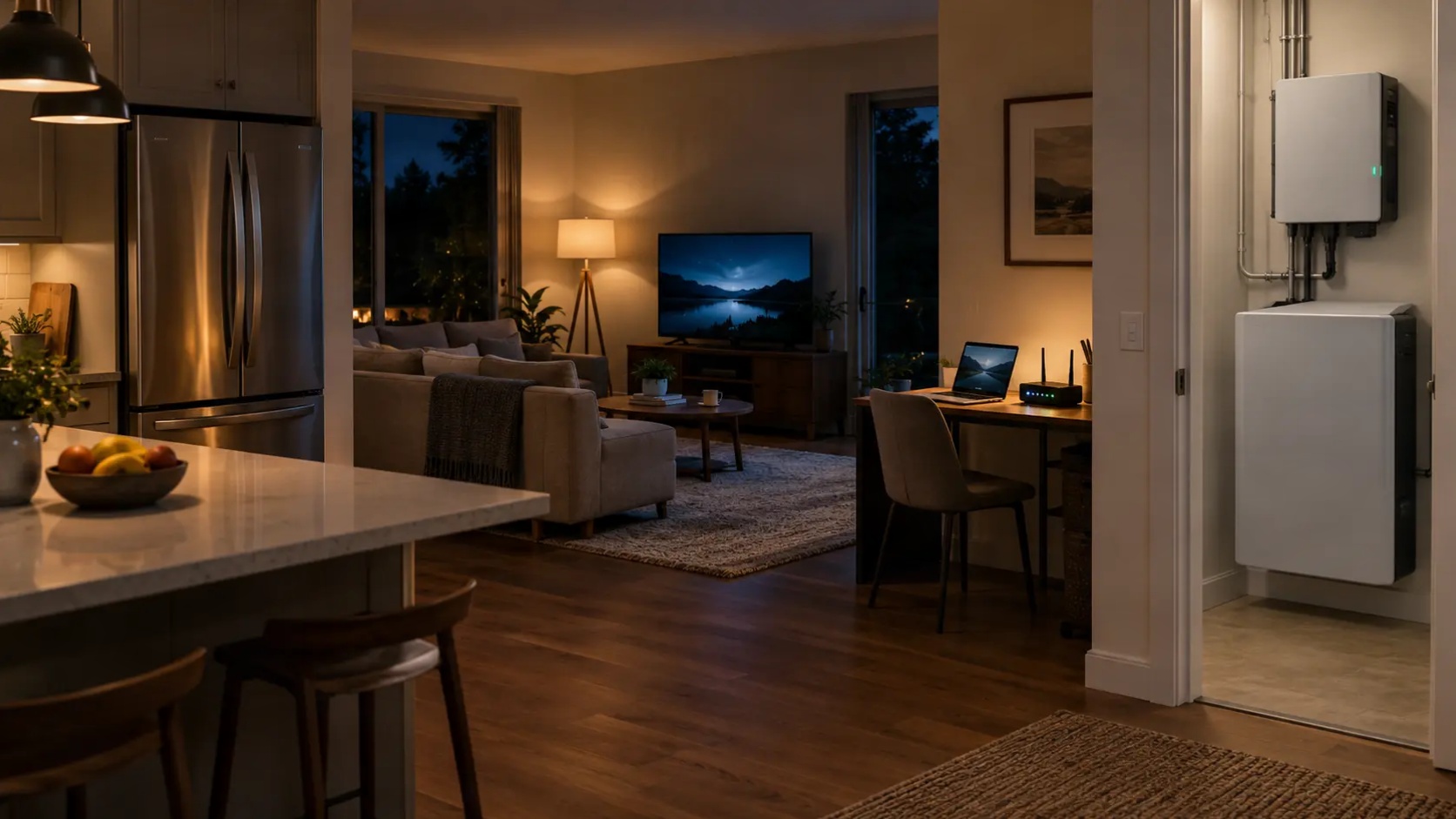
Can a 10 kWh battery run a refrigerator, Wi-Fi and lights?
Usually this is a much easier backup target than whole-home use. If your combined essentials average only a few hundred watts after appliance cycling is considered, a 10 kWh-class battery can potentially cover a long outage period. The exact answer depends on the battery’s usable energy and your measured consumption.
As a planning example, an average 400 W load would theoretically consume 9.6 kWh over 24 hours. That is already close to the entire nominal capacity of a 10 kWh battery before considering losses or reserve settings. At an average 250 W, the same 24 hours requires only 6 kWh.
Can a 10 kWh battery run air conditioning?
Possibly, but there are two separate questions. First, can the battery inverter provide enough continuous and startup power for the air conditioner? Second, how quickly will the air conditioner consume the stored energy?
A system can have 10 kWh of energy but insufficient inverter output to start a large compressor. Conversely, a powerful inverter may start the unit successfully while the air conditioner still drains the battery in a relatively short time.
For HVAC backup, use the exact model’s running current, startup requirement and expected duty cycle. Do not size from a generic “air conditioner watts” table.
Can a 10 kWh battery run an entire house?
It can power a home’s electrical panel if the complete backup system is designed for it, but that does not mean 10 kWh provides unrestricted whole-home runtime. A house averaging 3 kW would theoretically consume 10 kWh in about 3.3 hours. A carefully managed essentials load averaging 0.4 kW would use the same energy far more slowly.
“Whole-home backup” therefore describes system architecture as much as battery duration. Ask what loads can operate simultaneously and what the expected runtime is at your actual outage consumption.
10 kWh usable vs 10 kWh nominal
Always check which number the manufacturer publishes. Nominal capacity describes stored battery energy under the manufacturer’s definition. Usable capacity is the amount made available for normal operation. Backup reserves and system settings can reduce what is available during a particular outage.
For example, Enphase publishes the current IQ Battery 10C at 10 kWh usable energy and 7.08 kW continuous output. That is useful because it tells you both the energy bucket and the rate at which the system can supply loads.
How solar panels extend battery runtime
If the battery is paired with solar and the system supports solar operation during a grid outage, daytime production can run household loads and recharge the battery. In good conditions, that can extend backup far beyond the battery-only runtime calculation.
But solar production is not guaranteed. Cloud cover, winter conditions, shading and a small array can reduce recharge. Plan the battery to meet your actual resilience goal rather than assuming every day will fully refill it.
A better way to estimate your runtime
- List only the appliances you need during an outage.
- Measure or estimate their daily kWh, accounting for cycling.
- Add the loads that may run simultaneously and check kW.
- Confirm the battery’s usable—not merely advertised—energy.
- Account for the backup reserve and system losses.
- Model a cloudy day as well as a sunny day if solar recharge matters.
10 kWh vs 13.5 kWh vs 15 kWh
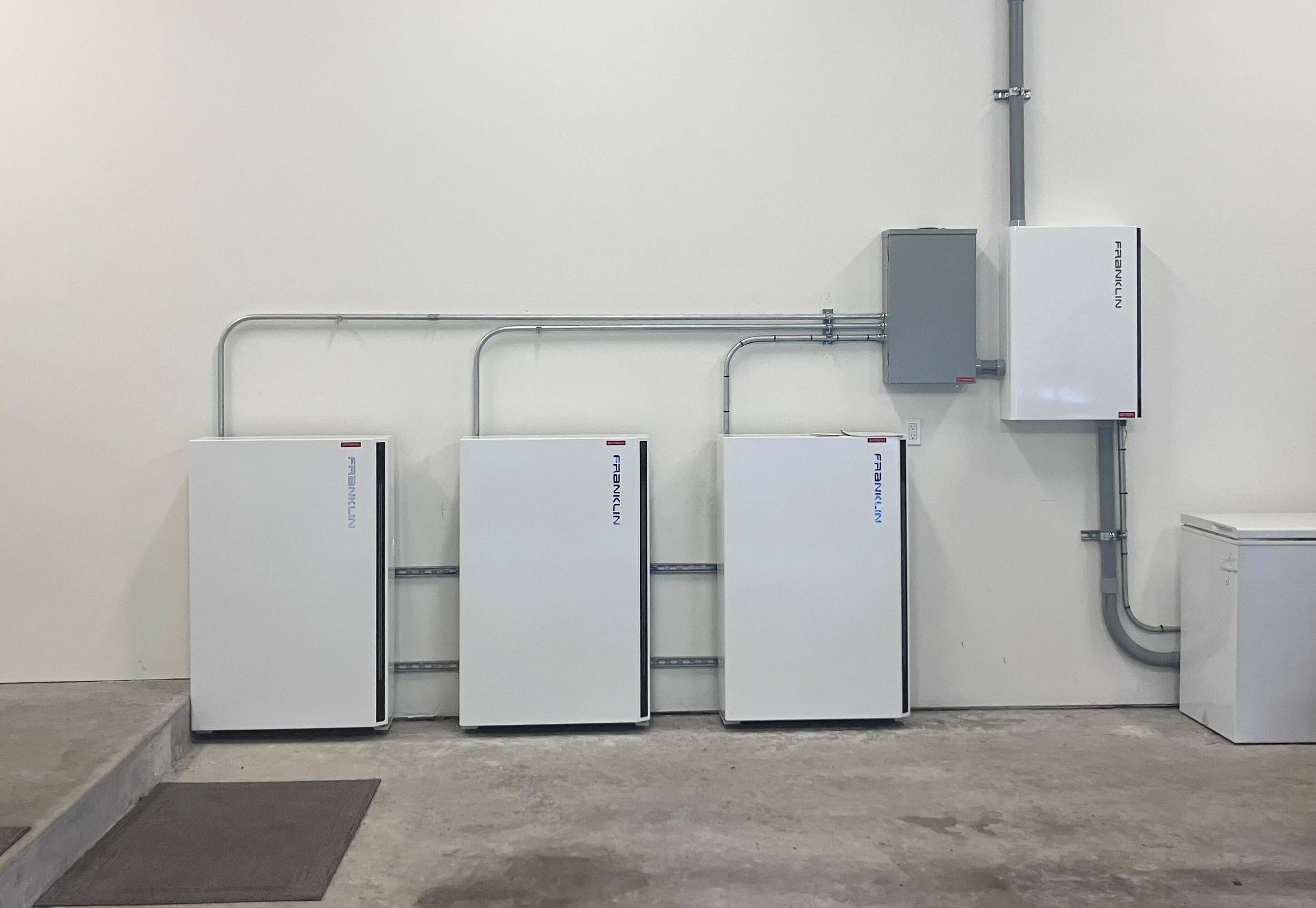
The difference becomes meaningful as outages get longer. At a theoretical constant 1 kW load, 10 kWh corresponds to 10 hours, 13.5 kWh to 13.5 hours and 15 kWh to 15 hours before losses or reserves.
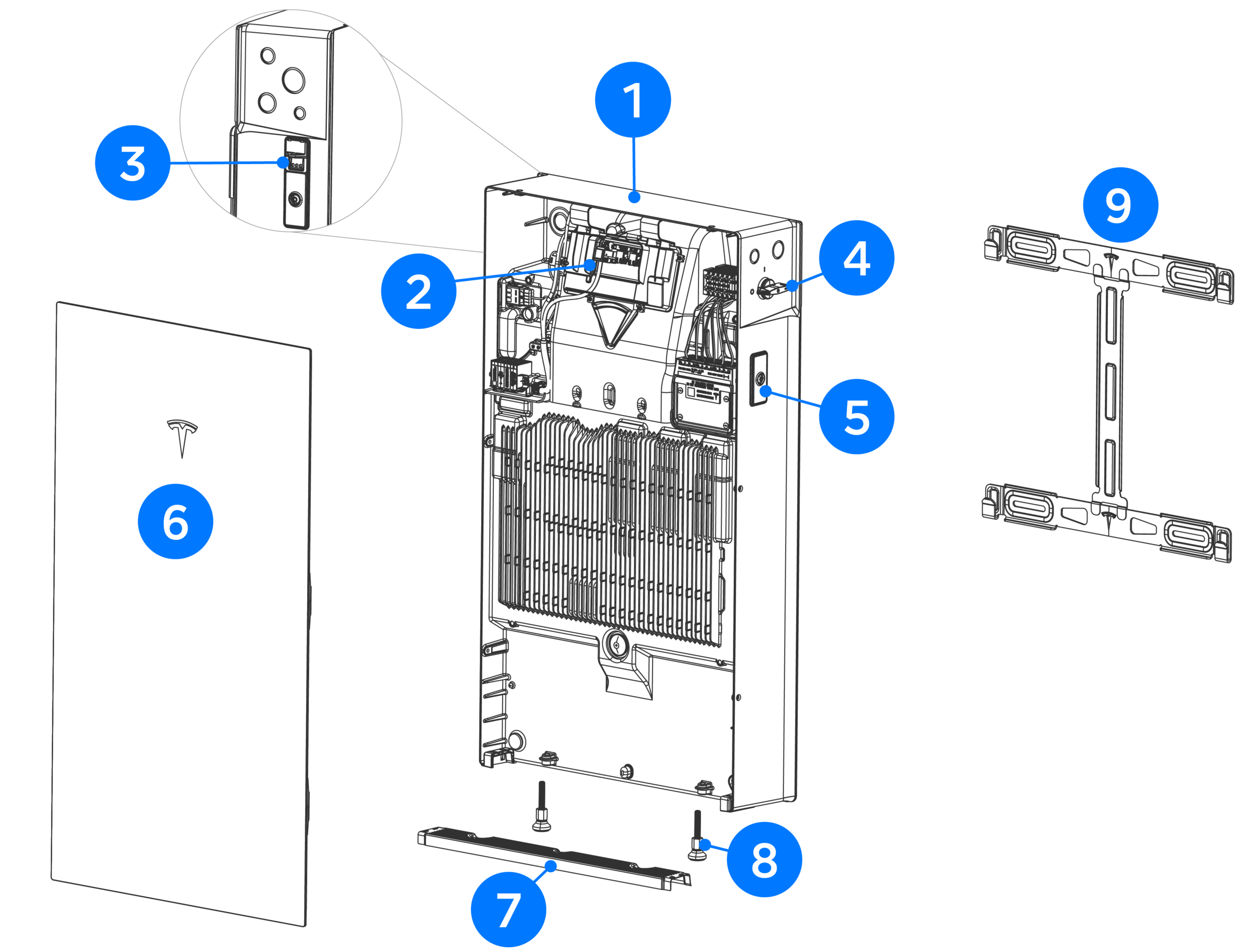
Current products illustrate this range. Enphase IQ Battery 10C provides 10 kWh usable, Tesla Powerwall 3 lists 13.5 kWh, and FranklinWH aPower 2 lists 15 kWh usable. Compare these systems in our Best Solar Battery Backup System for Home guide.
Frequently asked questions
How long will a 10 kWh battery run a refrigerator?
There is no accurate universal runtime because refrigerators cycle and their daily consumption varies. Find the appliance’s measured kWh per day, then divide the battery’s available usable kWh by that daily consumption. Remember that other backup loads share the same battery.
Will 10 kWh last overnight?
It can if your overnight load is below the battery’s available usable energy. If you use 6 kWh between sunset and morning, a 10 kWh usable battery has headroom. If you use 12 kWh, it does not.
Is 10 kWh enough for a power outage?
For carefully selected essential loads, it can be a useful amount of storage. For unrestricted electric HVAC, cooking, water heating and other large loads, it can disappear quickly.
How many 10 kWh batteries do I need?
Use our solar battery sizing guide. Calculate the outage kWh you need and the simultaneous kW your system must support before deciding on the number of batteries.
The bottom line
A 10 kWh solar battery is large enough to provide meaningful home backup, but runtime can range from a few hours under heavy loads to much longer under a carefully managed essentials load. Do not ask only “what can 10 kWh run?” Ask how many kWh do my essentials use, what is their peak kW demand, and can solar recharge the battery during the outage?