Last updated: September 2026
Keeping a refrigerator running is one of the most common reasons people look for battery backup. The good news is that refrigeration is a much easier target than backing up an entire electric home. The difficult part is estimating energy correctly because a refrigerator compressor cycles rather than running continuously.
This guide explains how to size solar battery backup for refrigerator during a power outage, including startup power, daily kWh use, battery runtime and when a portable power station may make more sense than a permanent home battery.
Quick answer: What size battery backup do I need for a refrigerator?
Start with the refrigerator’s measured daily energy use in kWh, not only its running watts. Then multiply that daily energy by the number of outage days you want to cover and add headroom for battery reserves and conversion losses.
As a simple example, a refrigerator using 1.5 kWh per day needs 3 kWh of delivered energy for two days without any recharge. Solar production during the outage can reduce the amount of stored energy you need if the system is designed to recharge from solar while the grid is down.
Why refrigerator watts can be misleading
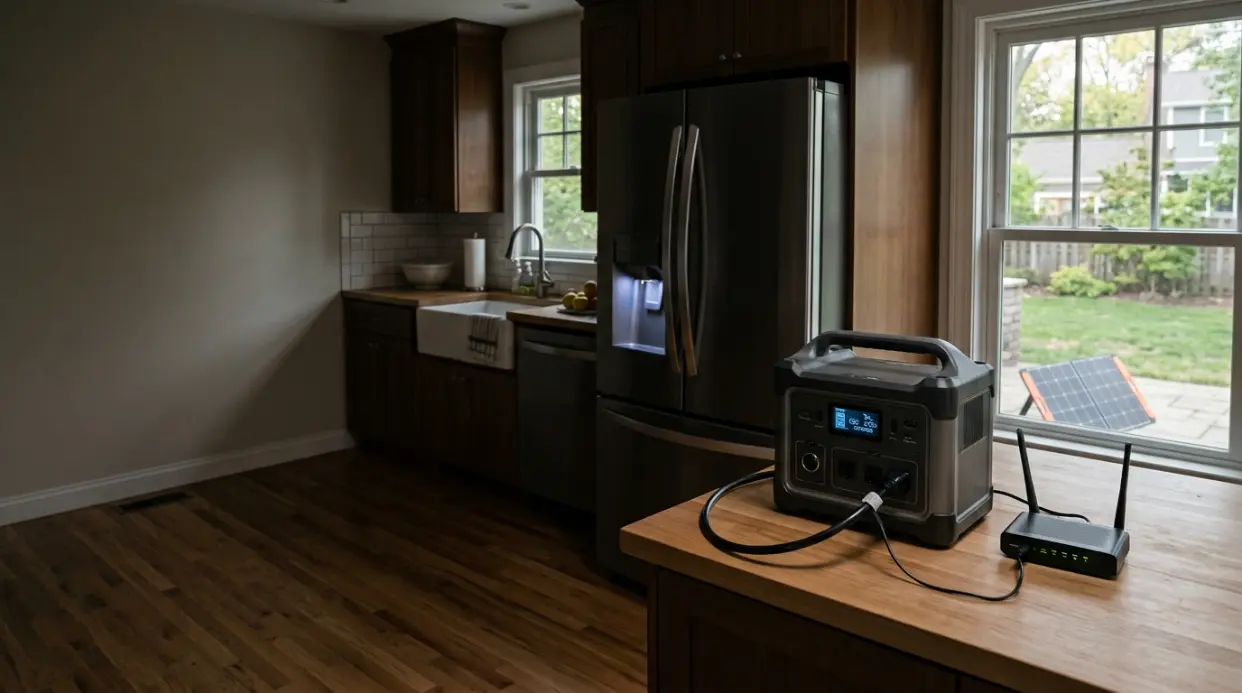
A refrigerator might draw a few hundred watts while the compressor is running, but the compressor switches off once the cabinet reaches temperature. Multiplying running watts by 24 hours can therefore badly overestimate daily energy use.
Look for an EnergyGuide or manufacturer annual-energy figure, use a plug-in energy meter where appropriate, or check smart-home/circuit monitoring. Divide annual kWh by 365 for a rough daily average.
Refrigerator backup sizing formula
Required delivered energy = refrigerator daily kWh × outage days
Then account for the battery system’s usable capacity, inverter losses and any reserve you intend to keep.
Example:
- Refrigerator consumption: 1.2 kWh/day
- Target outage: 2 days
- Basic delivered-energy requirement: 2.4 kWh
That does not mean a 2.4 kWh advertised battery is automatically enough. Confirm how much energy reaches AC appliances after the system’s operating limits and reserve settings.
Do refrigerators need extra startup power?
Yes. A compressor can briefly require more power when starting than during normal operation. Battery capacity in kWh does not answer this question; the inverter’s continuous and surge output does.
When comparing a portable power station or home battery, check that its AC output can handle the refrigerator’s startup requirement. If the manufacturer provides compressor LRA or startup-current information, use that rather than a generic internet estimate.
How long will a 5 kWh battery run a refrigerator?
If the battery actually delivers 5 kWh to the load and the refrigerator consumes 1 kWh per day, the mathematical result is five days. If the refrigerator consumes 2 kWh per day, it becomes 2.5 days. Real runtime will differ because usable capacity, inverter efficiency, reserve settings, temperature and refrigerator behavior matter.
The correct formula is:
Runtime in days = available battery kWh ÷ refrigerator kWh per day
How long will a 10 kWh battery run a refrigerator?
A 10 kWh-class battery is normally much larger than what a refrigerator alone requires for a short outage. This makes sense when the same battery also supports a freezer, Wi-Fi, lights, outlets and other household essentials.
Read our What Can a 10 kWh Solar Battery Run? guide for load-based runtime examples.
Solar changes refrigerator backup dramatically
A battery-only system has a fixed energy budget. A solar-plus-battery system can add new energy during daylight if it is configured to operate during grid outages. If daily solar production exceeds the refrigerator and other critical-load consumption, the battery can potentially recover during the day.
Do not assume perfect sunshine. For resilience planning, ask what happens after a cloudy day and how much of your solar array remains available for backup charging.
Portable power station vs home battery for a refrigerator
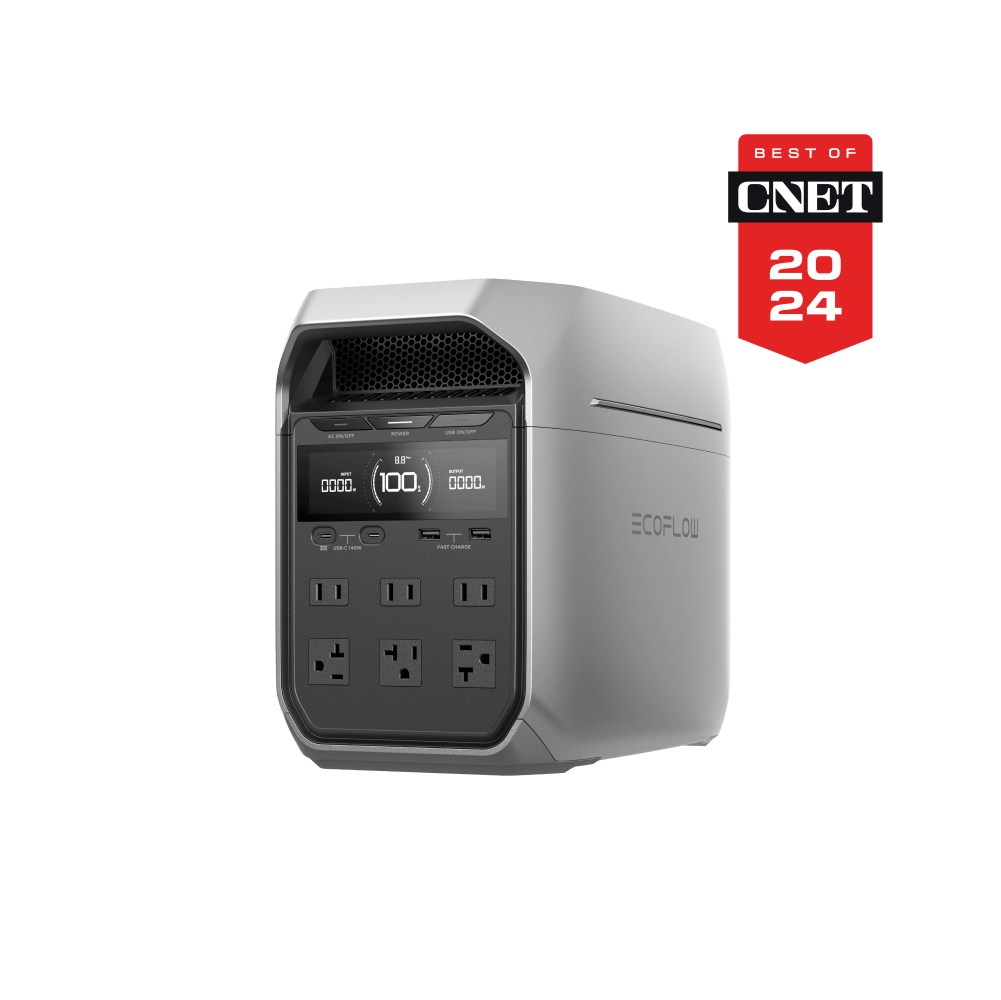
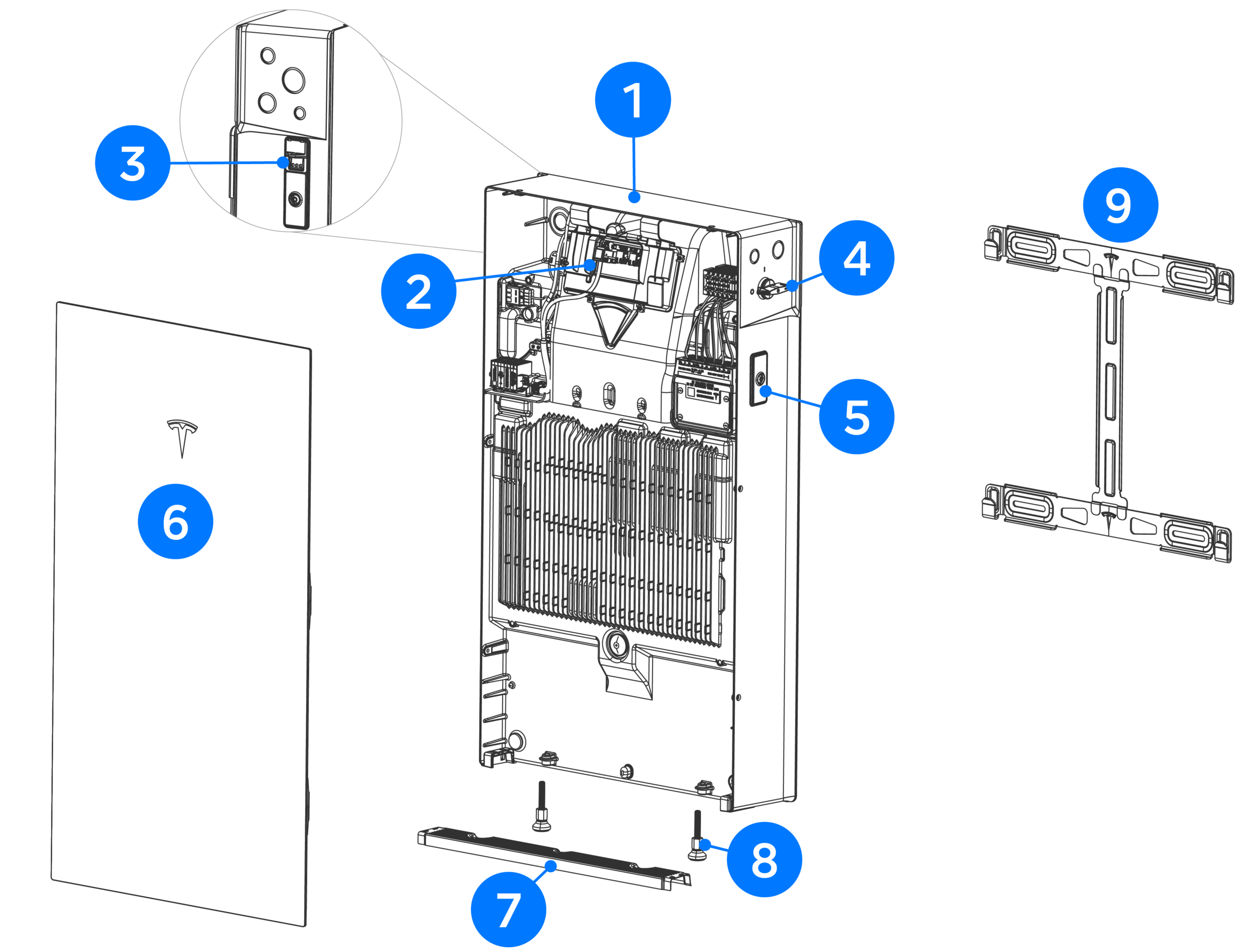
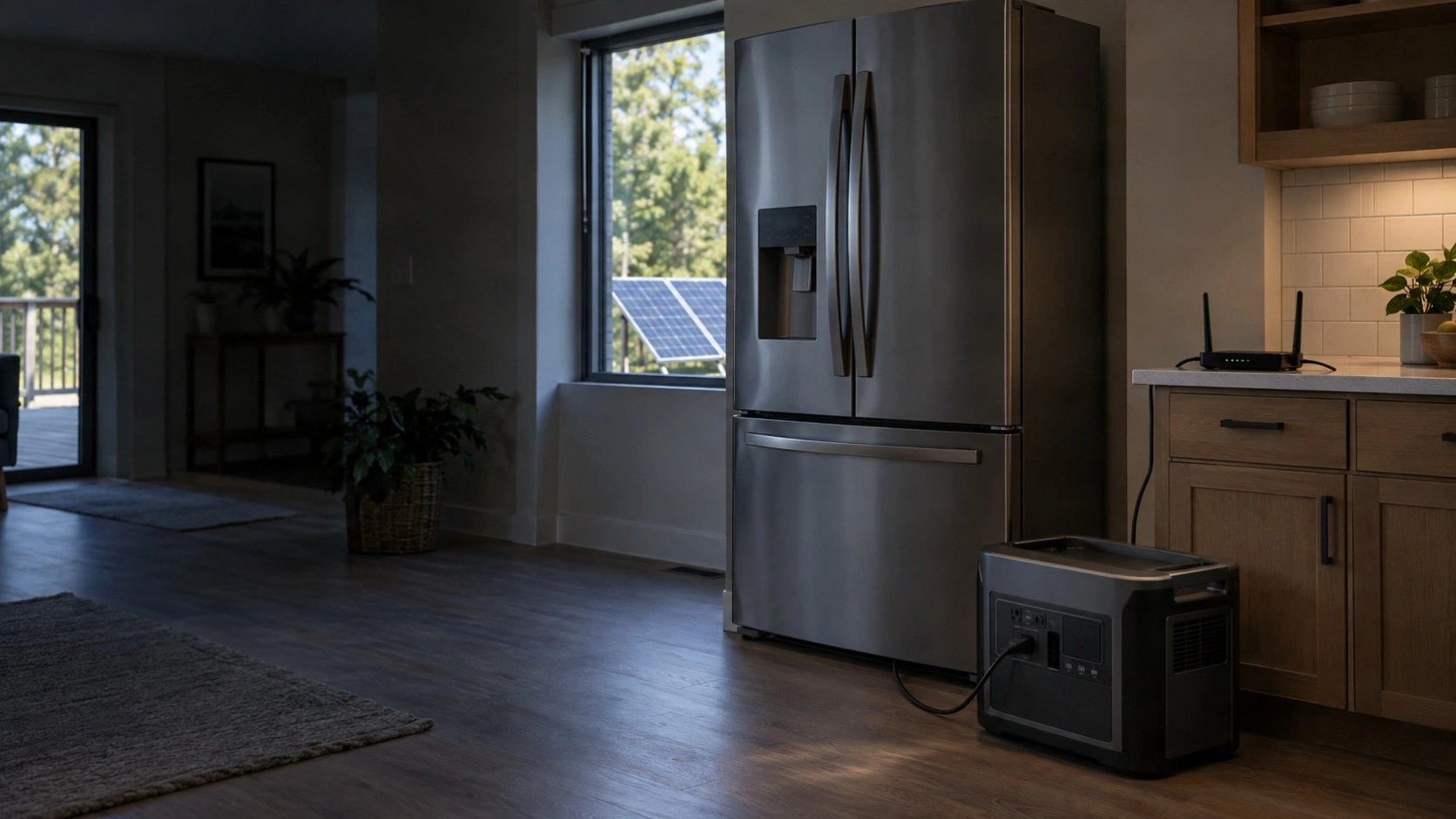
If the refrigerator is your main concern, a portable power station can be much cheaper and simpler than a professionally installed whole-home battery. Look for enough usable energy, an inverter that handles compressor startup and a safe way to keep the unit charged.
A permanent home battery becomes more attractive when you want automatic transfer, multiple backed-up circuits, rooftop-solar integration and support for larger loads.
What else should you back up with the refrigerator?
Once you are buying storage, consider the full essentials list rather than sizing the battery for one appliance. A freezer, router/modem, several LED lights, phones, laptops, medical equipment and a few outlets can often share the same backup system without approaching the demand of central HVAC or electric cooking.
This is where a critical-load panel or managed whole-home system can make outages much easier.
Common mistakes when sizing refrigerator backup
- Using only rated watts: daily kWh is more useful for runtime because the compressor cycles.
- Ignoring startup surge: the inverter still needs enough short-duration power to start the compressor.
- Assuming all 2 kWh batteries deliver 2 kWh: usable energy and reserves vary.
- Forgetting the freezer: many homes actually need to protect two refrigeration loads.
- Ignoring solar recharge: a sunny outage can be very different from a battery-only calculation.
- Running unnecessary large loads: HVAC, cooking and heaters can consume storage that would otherwise keep food cold much longer.
Should you buy a full solar battery just for a refrigerator?
Usually not unless you also want broader home backup or solar energy management. Current permanently installed home batteries commonly provide around 10–15 kWh per main unit, far more than many refrigerators consume in a day.
If you are planning broader protection, see our Best Solar Battery Backup System for Home guide. If you need to determine the number of batteries, use our home battery sizing guide.
Frequently asked questions
Can a solar battery keep a refrigerator running overnight?
Yes, if the available battery energy exceeds the refrigerator’s overnight consumption and the inverter can start the compressor. Many battery systems have more than enough energy for a refrigerator alone, but check your appliance and battery rather than assuming.
Will a 2 kWh battery run a refrigerator?
It may, particularly for a short outage, but runtime depends on the refrigerator’s daily kWh and how much of the battery’s 2 kWh is actually usable at the AC outlet.
Can I plug a refrigerator directly into a portable power station?
Many portable power stations provide AC outlets suitable for appliances, but confirm the refrigerator’s voltage, running power and startup requirement against the power station’s specifications. Follow both manufacturers’ safety instructions.
Can solar panels run my refrigerator when the grid is down?
Only if the solar system is designed to operate during an outage. Standard grid-tied solar commonly shuts down when the grid fails for safety. A compatible battery, inverter and isolation/transfer system can allow solar to continue serving backup loads.
The bottom line
For refrigerator backup, measure energy before buying battery capacity. Find the refrigerator’s kWh per day, decide how many outage days you want, confirm compressor startup power and then add the other essentials you actually need.
A portable power station may be enough when refrigeration is the main goal. A permanently installed solar battery makes more sense when you want automatic backup for multiple circuits and the ability to recharge from rooftop solar during an outage.