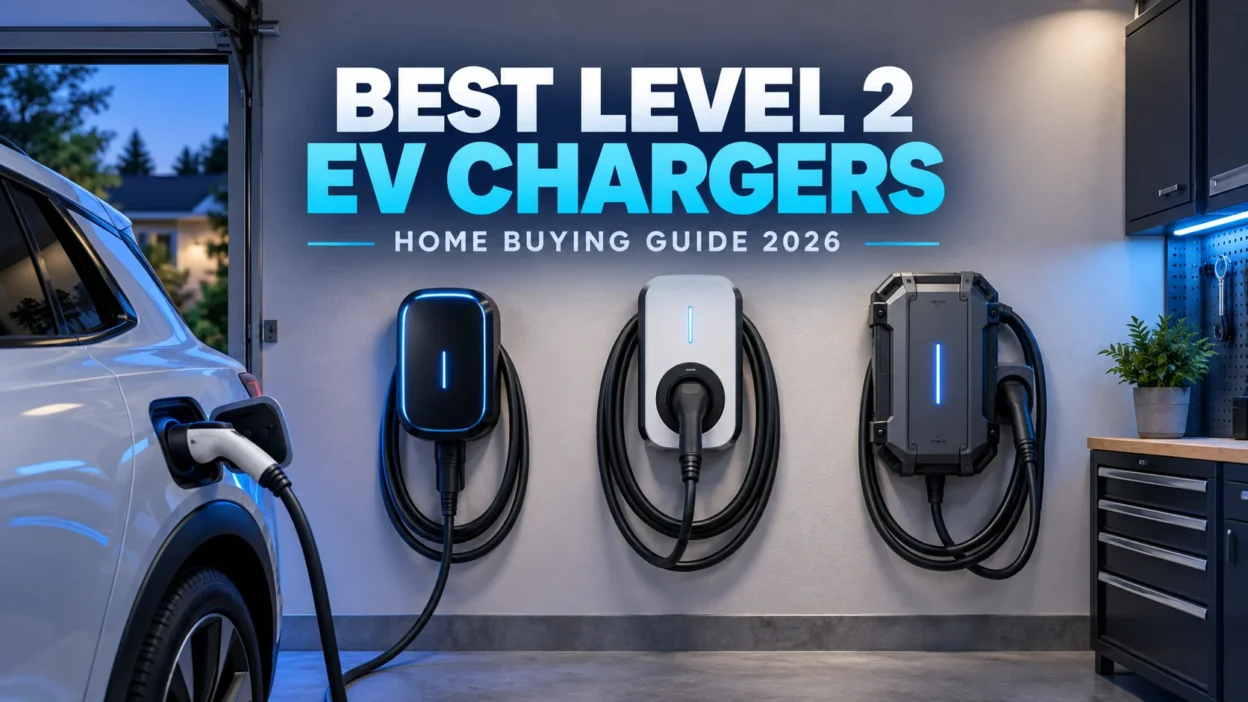
Quick answer: The Emporia Classic is our best overall Level 2 home charger for many households because it combines up to 48-amp hardwired charging, useful energy monitoring and a competitive price. The Tesla Universal Wall Connector is a stronger choice when a household needs both NACS and J1772 compatibility. Buyers who prefer a plug-in charger should compare the EVIQO 40A and Grizzl-E Classic.
Editorial disclosure: We have not hands-on tested every charger in this guide. Our selections are based on current manufacturer specifications, safety information, connector support, installation flexibility, app capabilities, warranty coverage, independent reporting and recurring buyer-interest signals, including Amazon. Marketplace sales ranks, prices and badges change frequently.
Best Level 2 home chargers at a glance
| Charger | Maximum output | Connection | Connector | Best for |
|---|---|---|---|---|
| Emporia Classic | 48A hardwired / 40A plug-in | Hardwired or NEMA 14-50 | J1772 or NACS options | Best overall value and energy tracking |
| Tesla Universal Wall Connector | 48A / 11.5 kW | Hardwired | NACS with integrated J1772 adapter | Mixed-EV households |
| ChargePoint Home Flex | Up to 50A / 12 kW hardwired | Hardwired; plug-in versions available | J1772 or NACS versions | Established app and charging ecosystem |
| EVIQO 40A Plug-In | 40A / 9.6 kW | NEMA 14-50 | J1772 | Value-oriented plug-in installation |
| Grizzl-E Classic | 40A / 9.6 kW | NEMA 14-50 or 6-50 options | J1772 or NACS options | Simple, rugged charging |
The maximum number on the box is not always the speed your car will receive. The vehicle’s onboard AC charger, circuit rating, installation method, temperature and battery conditions can all reduce the actual rate.
How we selected these chargers
We started with products receiving meaningful shopper attention on major retail platforms and in current home-charging discussions. Amazon demand is useful for discovering what people are actively buying, but popularity alone does not prove quality or electrical safety.
Each shortlisted product was then assessed using the following criteria:
- Maximum output and adjustable amperage
- Plug-in versus hardwired installation options
- J1772 and NACS availability
- Listed safety certifications and outdoor ratings
- Cable length and daily usability
- Scheduling, energy reporting and load-management features
- Warranty and manufacturer support
- Recurring strengths and complaints in owner feedback
- Total installed cost rather than charger price alone
We excluded products with unclear certification information or specifications that could not be verified beyond a marketplace listing.
1. Emporia Classic — best overall Level 2 home charger
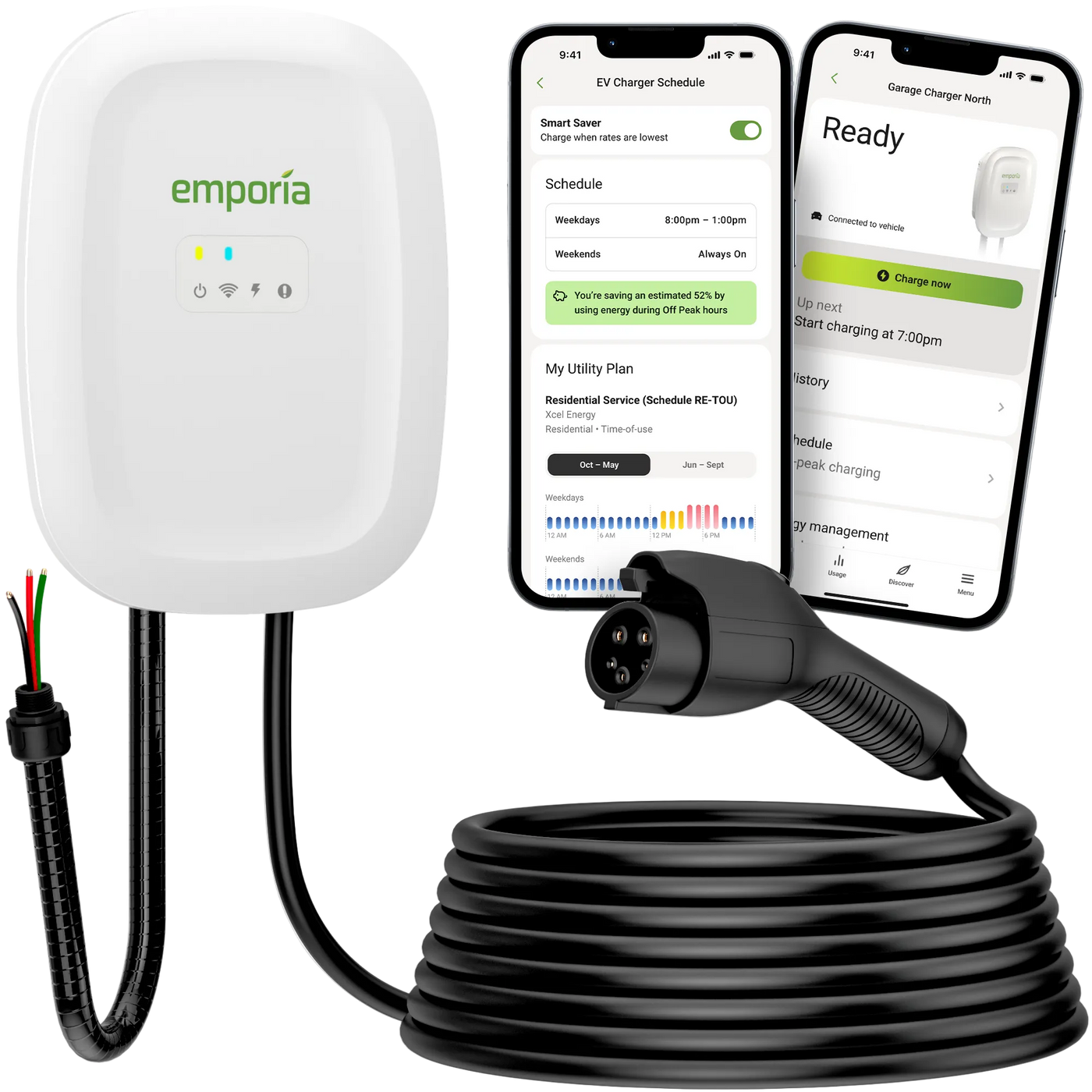
The Emporia Classic is a particularly good fit for HotGadgetsInfo readers because it connects EV charging with whole-home energy monitoring. The charger can deliver up to 40 amps when plugged into a suitable NEMA 14-50 outlet or up to 48 amps when hardwired to a properly sized circuit.
Its app supports schedules, energy tracking and coordination with other Emporia products. Homeowners who already use an Emporia Vue monitor can view EV charging alongside other household loads. That makes it easier to understand how overnight charging affects total consumption and electricity cost.
Why it stands out
- Up to 48A hardwired charging
- 40A plug-in option
- Strong energy-monitoring integration
- Smart scheduling and usage history
- UL certification and integrated protection stated by Emporia
- Useful path toward solar-aware and managed charging
What to consider
The smart-energy features provide the most value when the charger stays connected to Wi-Fi and is used within the Emporia ecosystem. Buyers wanting the simplest possible charger may not need its additional data features.
Best for: Homeowners who want a capable charger plus detailed control over household electricity use.
View current Emporia charger specifications.
2. Tesla Universal Wall Connector — best for mixed connector households
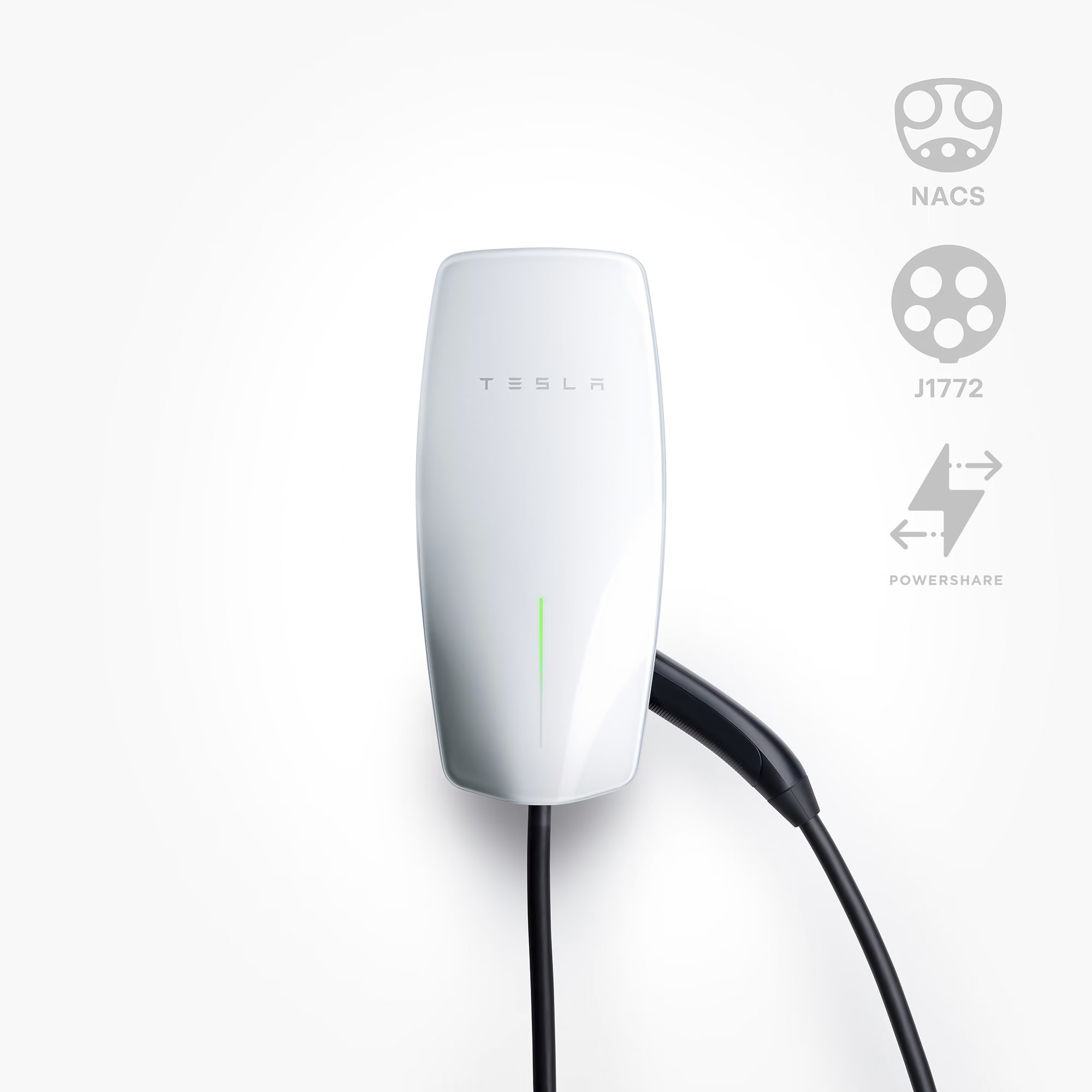
The Tesla Universal Wall Connector includes a NACS handle with an integrated J1772 adapter. That design makes it one of the cleanest choices for a household that owns different EV brands or expects to change connector types in the future.
Tesla lists output of up to 48 amps or 11.5 kW, a 24-foot cable, Wi-Fi connectivity, app-based schedules and a four-year residential warranty. It also supports power-management configurations that can help some homes charge without immediately increasing electrical service capacity.
Why it stands out
- Native NACS connector with captive J1772 adapter
- Up to 48A / 11.5 kW
- 24-foot cable
- Tesla app scheduling and usage monitoring
- Indoor and outdoor installation
- Four-year residential warranty
What to consider
It is a hardwired product requiring professional installation. The full 48-amp output needs an appropriately designed circuit, and some EVs accept less. Tesla’s own product page notes that certain Model 3 and Model Y versions are limited to 32 amps.
Best for: Households that need convenient charging for both NACS and J1772 vehicles.
View the Tesla Universal Wall Connector.
3. ChargePoint Home Flex — best established charging ecosystem
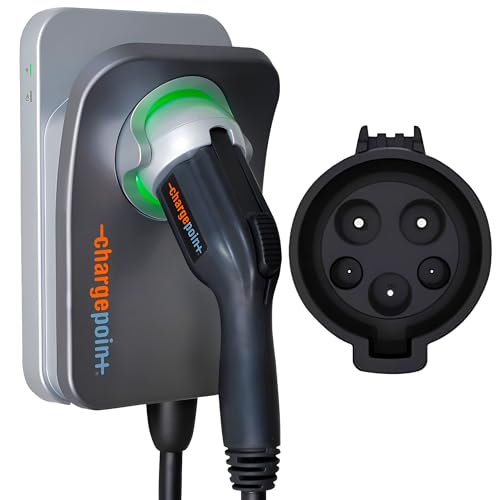
ChargePoint operates a large public charging network, and the Home Flex brings its app experience into the garage. The current hardwired model can deliver up to 50 amps or 12 kW, while plug-in configurations are generally limited to 40 amps.
The app supports scheduling, reminders and energy-use information. J1772 and NACS versions are available, allowing buyers to select a direct connector rather than rely on a separate adapter.
Why it stands out
- Up to 50A hardwired output
- Adjustable amperage
- J1772 and NACS versions
- 23-foot charging cable
- ENERGY STAR certification and UL listing stated by ChargePoint
- One app for compatible home and public charging activity
What to consider
The Home Flex can cost more than some value-focused competitors. Some owner discussions also criticize particular app behaviors, so buyers who depend heavily on advanced automation should review the latest app feedback rather than relying on old launch reviews.
Best for: Drivers who already use ChargePoint public stations and want a familiar app and established brand.
View ChargePoint Home Flex specifications or check the referenced model on Amazon.
4. EVIQO 40A Plug-In — best value plug-in smart charger
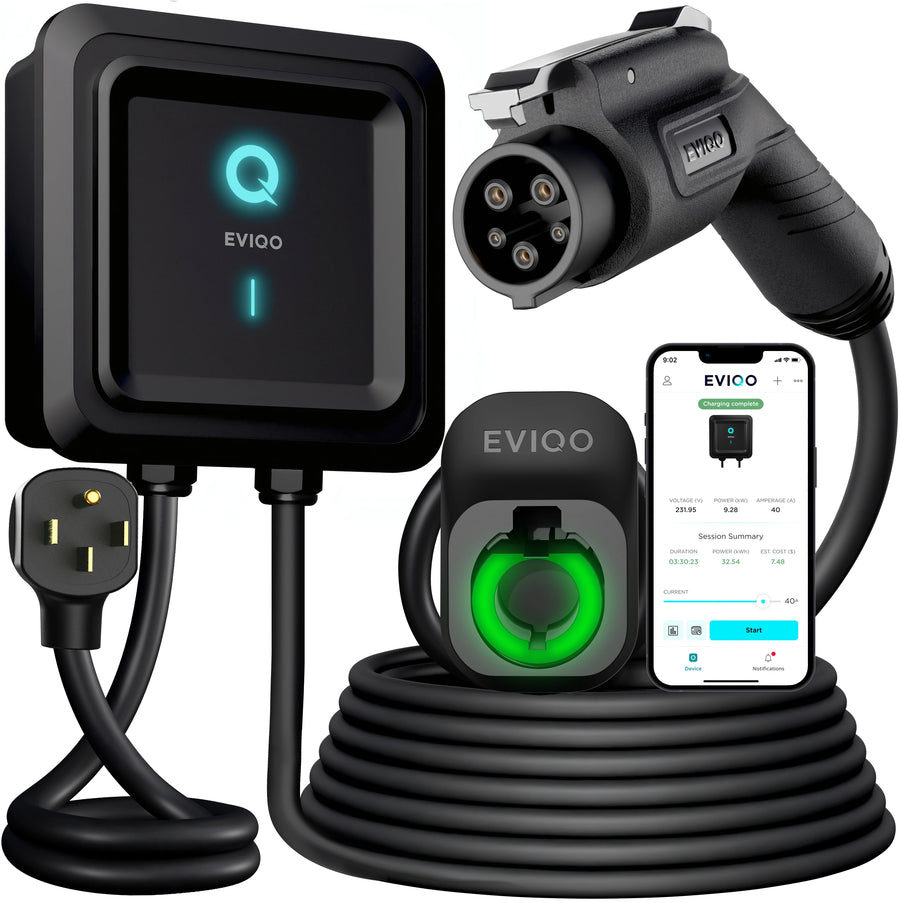
The EVIQO 40A plug-in charger delivers up to 9.6 kW from a correctly installed NEMA 14-50 circuit. It combines a 25-foot cable, app scheduling, adjustable current and energy-cost tracking at a price that often competes well with larger brands.
Its strong visibility on Amazon made it relevant to our research, but a marketplace badge should be treated as a demand signal rather than proof that it is the right charger for every home.
Why it stands out
- 40A / 9.6 kW plug-in charging
- 25-foot cable
- 2.4 GHz Wi-Fi app controls
- Scheduling and electricity-cost estimates
- Manufacturer-listed IP66 / NEMA 4 enclosure
- Three-year warranty
What to consider
EVIQO is a smaller brand than Tesla or ChargePoint. Buyers must also distinguish carefully between its 40A plug-in, higher-output hardwired, J1772 and NACS models. Never configure a plug-in unit above the safe continuous rating of its circuit.
Best for: Buyers who already have a suitable NEMA 14-50 outlet and want smart controls without hardwiring immediately.
Read our complete EVIQO Level 2 charger guide, or view the referenced model on Amazon.
5. Grizzl-E Classic — best simple and rugged option
The Grizzl-E Classic focuses on the essentials: a durable enclosure, adjustable current and dependable Level 2 charging without making app features the center of the experience. Current versions are offered with NEMA 14-50 or 6-50 input options and J1772 or NACS vehicle connectors.
Maximum output is 40 amps or 9.6 kW. The current product family lists a 25-foot output cable, which is useful for larger garages or cars with charge ports in different locations.
Why it stands out
- Up to 40A / 9.6 kW
- Adjustable lower current settings
- NEMA 14-50 and 6-50 options
- J1772 and NACS choices
- Rugged enclosure and straightforward operation
- 25-foot cable on current models
What to consider
The Classic is best understood as a simpler charger. People who want advanced energy dashboards, solar coordination or extensive remote controls should consider a smart model instead. Confirm the exact plug, connector and cable length before ordering because the Grizzl-E family includes several related variants.
Best for: Drivers who prefer a robust charger with fewer connected features.
View Grizzl-E Classic information.
40A versus 48A or 50A: which do you need?
| Charging current | Approximate power at 240V | Typical circuit requirement |
|---|---|---|
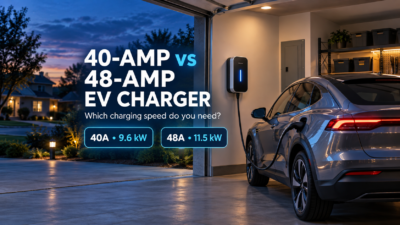
| 32A | 7.7 kW | 40A circuit |
| 40A | 9.6 kW | 50A circuit |
| 48A | 11.5 kW | 60A circuit |
| 50A | 12 kW | Usually a circuit sized according to manufacturer instructions and local code |
EV charging is normally treated as a continuous load, so the charging output must remain below the full breaker rating. A licensed electrician should select the breaker, conductors, termination method and charger configuration.
For many drivers, 40 amps is already enough to restore a normal day’s driving overnight. Higher output matters more for large-battery trucks, long daily mileage, short off-peak windows or households sharing one charger between two vehicles.
Plug-in or hardwired?
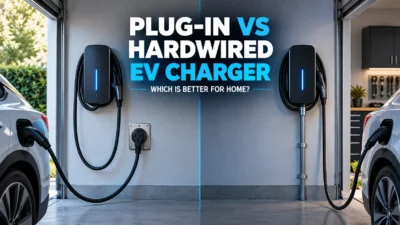
A plug-in charger is easier to remove or replace, which can suit renters and people who already have a professionally installed high-quality receptacle. Its practical maximum is generally 40 amps on a 50-amp NEMA 14-50 circuit.
Hardwiring removes the plug and receptacle connection, supports higher output on suitable circuits and often creates a cleaner outdoor installation. It also avoids a potential heat point at the receptacle. The trade-off is that relocation or replacement normally requires an electrician.
J1772 or NACS?
Check the vehicle’s actual AC charge port rather than assuming the model year tells the whole story. J1772 remains common on many non-Tesla vehicles, while Tesla and a growing number of newer North American models use NACS.
An adapter can solve many compatibility problems, but a native connector is more convenient for daily use. A universal charger with an integrated adapter may be worthwhile when a household owns two vehicles with different ports.
Safety and installation checklist
- Confirm that the exact model is listed by a recognized testing laboratory.
- Check the vehicle’s maximum AC charging rate.
- Have the panel and available load capacity assessed.
- Use a dedicated circuit and correctly sized conductors.
- For plug-in charging, use a receptacle suitable for long continuous loads.
- Never use an ordinary extension cord.
- Follow local permit, inspection and GFCI requirements.
- Keep the cable clear of doors, tires and walking paths.
- Use a licensed electrician for new circuits and hardwired installations.
If panel capacity is uncertain, a home energy monitor can help explain household demand, although it does not replace an electrician’s load calculation. Our appliance energy measurement guide also explains the difference between watts, kilowatts and kilowatt-hours.
Our verdict
The Emporia Classic offers the strongest balance for many buyers because it supports both plug-in and hardwired paths while providing useful energy data. Choose the Tesla Universal Wall Connector when connector flexibility matters most, ChargePoint Home Flex for an established connected ecosystem, EVIQO for a value-oriented smart plug-in setup, or Grizzl-E Classic for straightforward rugged charging.
The best charger is ultimately the one that matches the car, electrical panel, connector, parking layout and daily mileage. Confirm those details before comparing prices.
Frequently asked questions
What is the best amperage for a home EV charger?
For many households, 32A or 40A is sufficient for overnight charging. A 48A or 50A unit can reduce charging time if the vehicle accepts the higher rate and the home has enough electrical capacity.
Can I install a Level 2 charger myself?
A portable charger may plug into an existing compliant outlet, but installing a new 240V circuit or hardwired charger should be handled by a licensed electrician.
Does a higher-power charger damage the battery?
The vehicle controls how much AC power it accepts. A correctly configured Level 2 charger does not force the car above its supported rate.
Are Amazon best sellers automatically the best chargers?
No. Amazon rankings show shopper activity, not complete evidence of long-term reliability, electrical certification or compatibility. Use them to discover products, then verify the exact model through official documentation.
Do I need a smart EV charger?
A smart charger is useful for off-peak schedules, energy tracking and access controls. If the vehicle already provides reliable scheduling, a simpler charger may be enough.