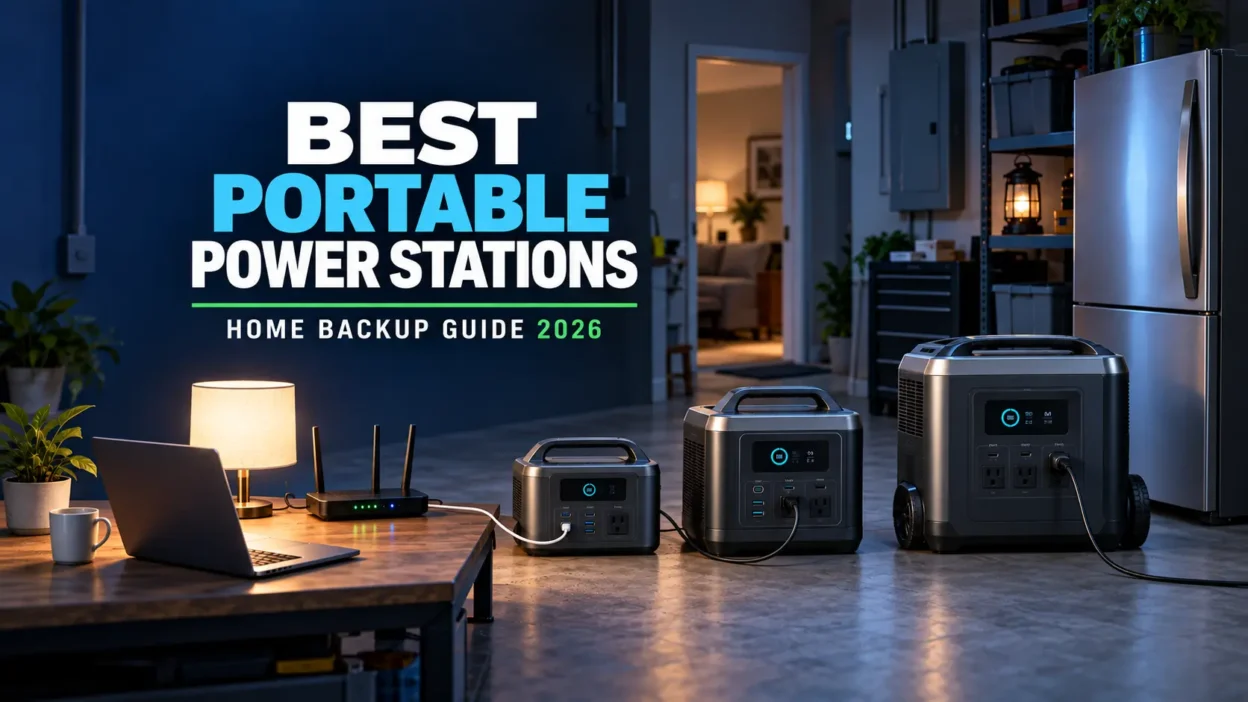
Quick answer: The best portable power station for most home-backup needs is one that balances usable battery capacity, continuous inverter output, recharge speed and safe battery chemistry. For many households, a 2–4 kWh unit with at least 2,000W of continuous output is a practical starting point for keeping a refrigerator, router, lights, television and small electronics running during an outage. Larger 120V/240V systems are better suited to pumps, selected circuits and heavier loads.
How we selected these products: HotGadgetsInfo has not personally tested every model in this guide. Our recommendations are based on current manufacturer specifications, warranty information, system design, expandability and suitability for common home-backup situations. Always confirm the final configuration with the manufacturer or a qualified installer.
Best portable power stations for home backup: quick picks
| Product | Best for | Battery capacity | Continuous output |
|---|---|---|---|
| Jackery HomePower 3000 | Best overall | 3,072Wh | 3,600W |
| EcoFlow DELTA Pro 3 | Best expandable premium system | 4,096Wh | 4,000W |
| Anker SOLIX F3800 | Best for 120V/240V and heavy loads | 3,840Wh | 6,000W |
| BLUETTI Elite 200 V2 | Best mid-capacity option | 2,073.6Wh | 2,600W |
| EcoFlow DELTA 3 Plus | Best compact essentials backup | 1,024Wh | 1,800W |
Specifications can change by market and configuration. Confirm voltage, outlet type and included accessories before buying.
How we chose these portable power stations
A large battery number alone does not make a power station suitable for home backup. We compared the features that determine whether a unit can reliably support essential appliances during a real outage:
- Usable capacity: how much stored energy is available after normal conversion losses.
- Continuous output: the wattage the inverter can deliver without relying on temporary surge modes.
- Surge capability: important for appliances with compressors or motors.
- Battery chemistry: lithium iron phosphate, or LFP, is generally preferred for frequent home-backup use because of its cycle life and thermal stability.
- Recharge options: AC, solar, vehicle and generator charging can make a major difference during longer outages.
- Expandability: compatible extra batteries allow a system to grow without replacing the main unit.
- Home integration: some larger systems can support transfer switches or selected household circuits when installed correctly.
- Warranty and support: a home-backup purchase should have clear manufacturer documentation and after-sales support.
If you are unsure how much capacity you need, start with our portable power station sizing guide.
1. Jackery HomePower 3000 — best overall
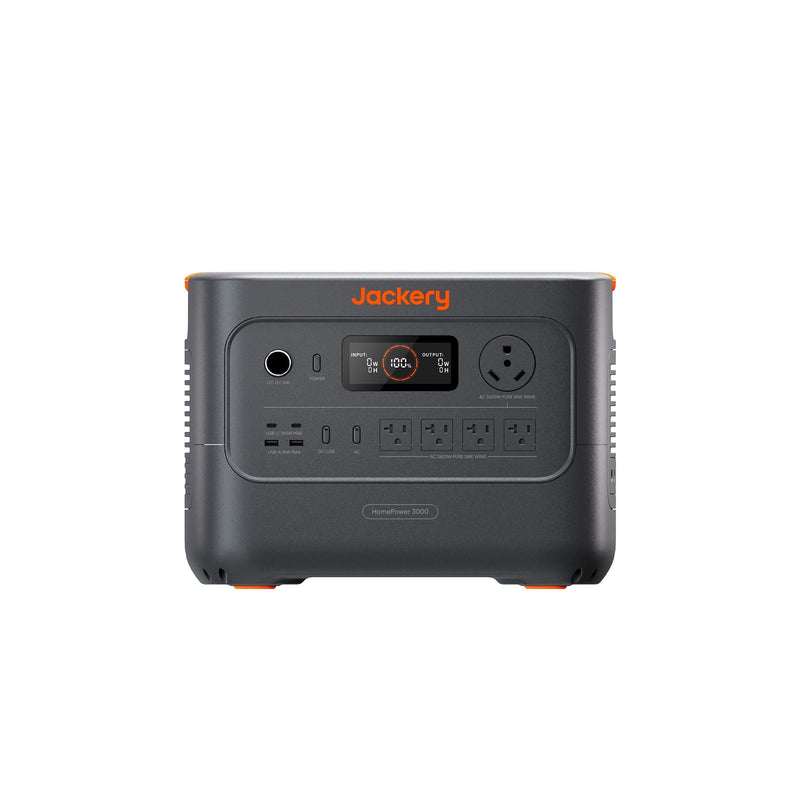
The Jackery HomePower 3000 is our best overall choice because its 3,072Wh battery and 3,600W continuous output create a useful middle ground between compact power stations and much larger expandable home systems. It has enough inverter capacity for several essential household appliances, while remaining simpler than a permanently installed battery. These figures come from Jackery’s official product specifications.
Its capacity can cover a refrigerator, internet equipment, lights, laptops and intermittent television use for a meaningful period, provided high-draw appliances are managed carefully. The 3,600W output also gives it more flexibility with short appliance peaks than entry-level units.
Why it stands out
- Balanced 3,072Wh capacity and 3,600W output
- LFP battery chemistry for repeated use
- Multiple charging options, including solar
- Strong fit for essential-load home backup
Consider before buying
- It is heavier and more expensive than 1 kWh units.
- It is not a substitute for a professionally installed whole-home system.
- Actual runtime will be lower than the simple capacity calculation because of inverter losses and standby consumption.
Best for: households wanting one capable unit for refrigerators, communications, lighting and everyday electronics.
2. EcoFlow DELTA Pro 3 — best expandable premium system
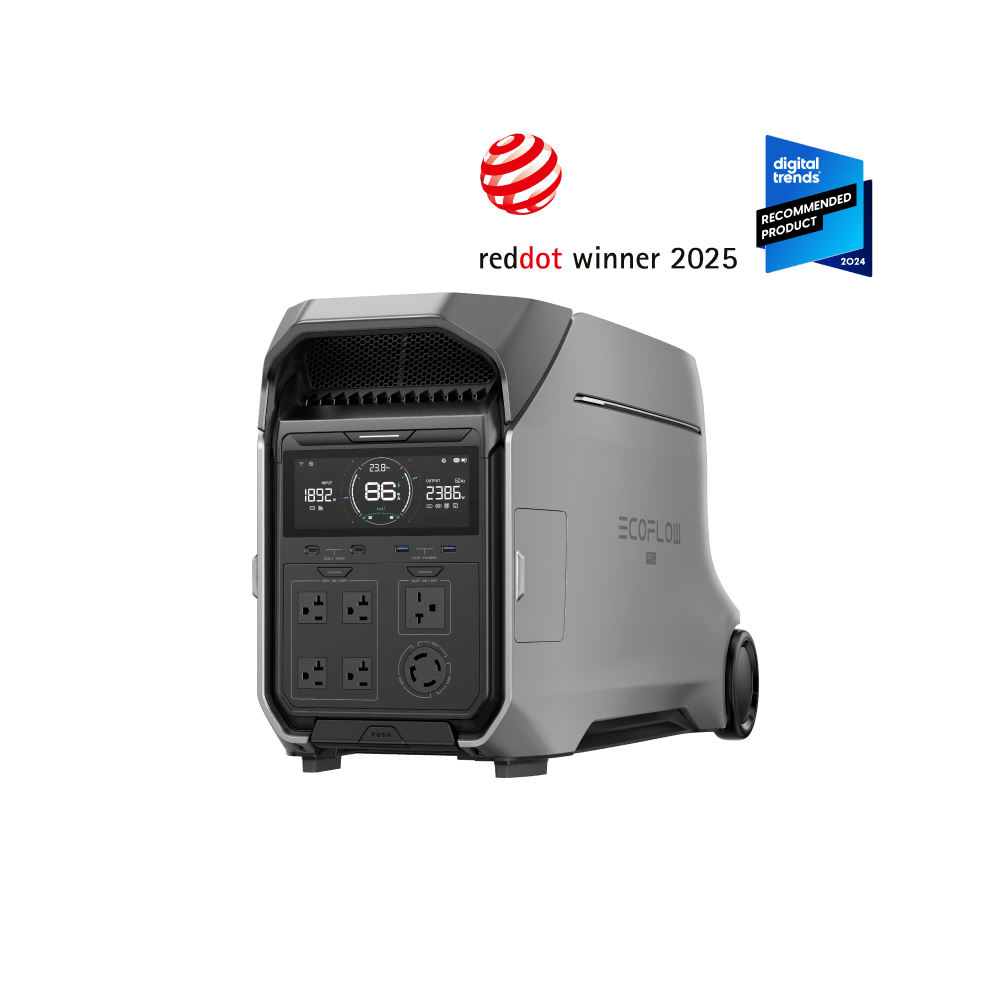
The EcoFlow DELTA Pro 3 starts with 4,096Wh of battery capacity and 4,000W of continuous AC output, according to EcoFlow’s official DELTA Pro 3 specifications. Its main advantage is not only its larger starting capacity, but also its ability to become part of a broader backup setup through compatible expansion batteries and home-integration accessories.
This makes it appealing to buyers who want useful backup today but may later need longer runtime. A modular system can be more practical than purchasing a fixed-capacity unit and replacing it when energy needs grow.
Why it stands out
- Large 4,096Wh starting capacity
- 4,000W continuous output
- Expandable ecosystem for longer backup duration
- Multiple charging and system-integration options
Consider before buying
- The complete expandable system can become expensive.
- Its size and weight reduce portability.
- Accessories and regional compatibility should be checked before purchase.
Best for: buyers who value expansion, longer outage coverage and the option to develop a more complete backup system over time.
3. Anker SOLIX F3800 — best for 120V/240V and heavy loads
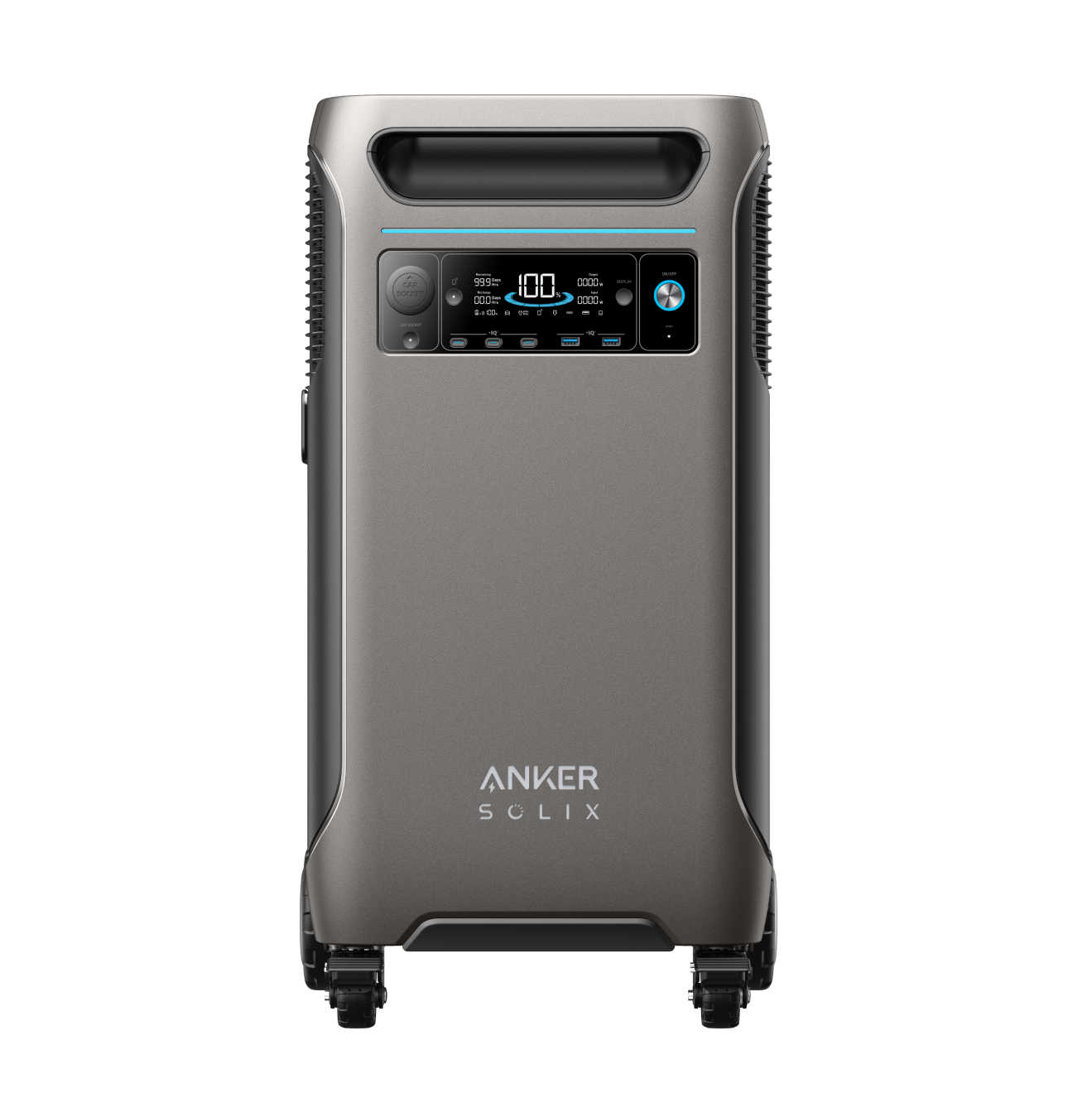
The Anker SOLIX F3800 is designed for higher-demand backup. Anker’s official specifications list 3,840Wh of capacity, 6,000W of continuous output and support for 120V/240V applications in compatible configurations. That makes it better suited than most compact units to larger appliances and selected household circuits.
High output does not automatically mean long runtime. A heavy load can drain 3.84 kWh quickly, so expansion batteries or careful load management may still be necessary. Its strongest advantage is the ability to start and run demanding equipment that lower-output units may not support.
Why it stands out
- 6,000W continuous output
- 120V/240V capability for compatible applications
- Expandable battery capacity
- Designed for heavier household loads
Consider before buying
- Higher-output equipment requires careful planning and safe connections.
- A transfer switch or home power panel must be installed by a qualified professional where required.
- The base capacity may not provide long runtime when powering heavy loads continuously.
Best for: users who need high inverter output, 240V capability or a path toward backing up selected home circuits.
4. BLUETTI Elite 200 V2 — best mid-capacity option
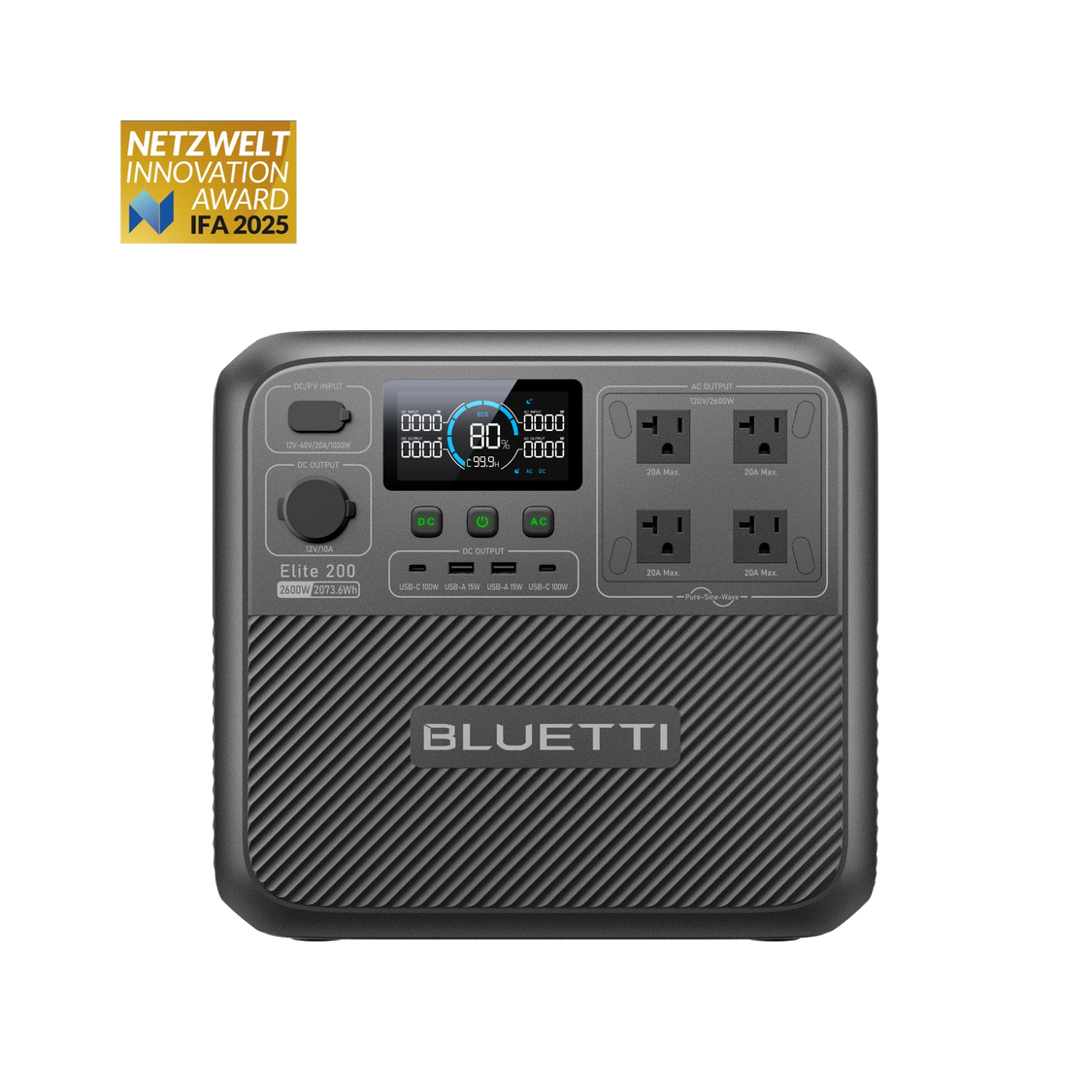
The BLUETTI Elite 200 V2 offers 2,073.6Wh of capacity and 2,600W of continuous output, based on BLUETTI’s official product specifications. This is a practical step up from compact 1 kWh units without moving into the cost and weight of a large 4 kWh system.
Its output should comfortably cover many essential-load combinations, such as a refrigerator, router, lights and computers, as long as the total running and startup wattage stays within the unit’s limits. The approximately 2 kWh capacity is especially useful for shorter outages or households that plan to rotate loads.
Why it stands out
- Useful balance of capacity, output and size
- LFP battery platform
- Suitable for several essential devices at once
- Less demanding to store than larger expandable systems
Consider before buying
- It provides less runtime than 3–4 kWh models.
- It is not intended to power every household load simultaneously.
- Check regional solar-input limits and included cables.
Best for: buyers seeking solid essential-appliance backup without paying for a premium whole-home-style ecosystem.
5. EcoFlow DELTA 3 Plus — best compact essentials backup
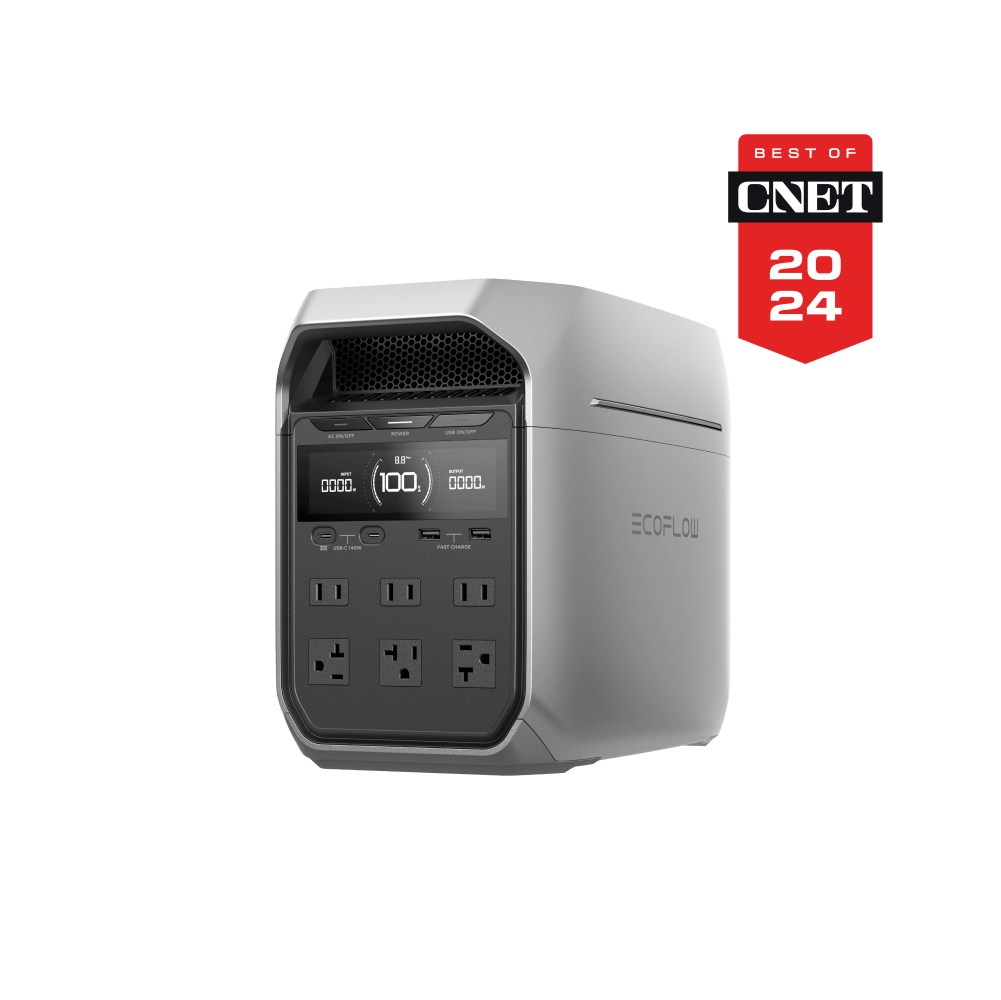
The EcoFlow DELTA 3 Plus has a 1,024Wh battery and 1,800W continuous output, as listed in EcoFlow’s official DELTA 3 series specifications. It is the smallest model in this list, but it can still be a sensible choice when the goal is to keep a few essentials operating rather than to support a large group of appliances.
A 1 kWh unit is easier to move, store and recharge than larger systems. It can work well for internet equipment, phones, laptops, lighting, medical devices within their specified requirements, and intermittent refrigerator operation. However, buyers should be realistic about runtime.
Why it stands out
- Compact and easier to move
- 1,800W output supports many common appliances
- Fast recharge options
- Good entry point for essential-load preparedness
Consider before buying
- Its 1,024Wh capacity limits overnight or multi-day runtime.
- Running a refrigerator alongside other devices requires load planning.
- It is not intended for electric heating, large air conditioners or whole-home backup.
Best for: apartments, short outages and households prioritizing communications, lighting and a few essential devices.
Portable power station comparison
| Model | Capacity | Output | Best use | Main trade-off |
|---|---|---|---|---|
| Jackery HomePower 3000 | 3,072Wh | 3,600W | Balanced home essentials | Size and cost |
| EcoFlow DELTA Pro 3 | 4,096Wh | 4,000W | Expandable premium backup | System cost |
| Anker SOLIX F3800 | 3,840Wh | 6,000W | Heavy loads and 240V | Runtime under high load |
| BLUETTI Elite 200 V2 | 2,073.6Wh | 2,600W | Mid-capacity essentials | Less expansion headroom |
| EcoFlow DELTA 3 Plus | 1,024Wh | 1,800W | Compact short-outage backup | Limited runtime |
What size portable power station do you need?
Start by listing the appliances you want to run, their wattage and the number of hours you expect to use them. Estimate required energy with this formula:
Required energy (Wh) = appliance watts × hours of use
Add the energy requirements for every device, then allow roughly 15–25% for inverter losses, standby use and a safety margin. For example, a 120W average refrigerator load running for 10 hours represents about 1,200Wh before losses. Real refrigerators cycle on and off, so a plug-in energy meter provides a better estimate than the label alone.
- Around 1 kWh: router, phones, laptops, lights and carefully managed refrigerator use.
- Around 2 kWh: several essentials for a longer period or a refrigerator plus communications and lighting.
- 3–4 kWh: stronger overnight coverage and more flexibility with multiple appliances.
- Expandable 4 kWh-plus systems: longer outages, higher loads or selected-circuit backup.
For refrigerator-specific planning, see our guide to battery backup for a refrigerator during an outage.
Features that matter most
Capacity and usable energy
Capacity is measured in watt-hours, but not every stored watt-hour reaches your appliances. Conversion losses, battery protection limits and idle consumption reduce usable energy. Plan with a margin instead of treating the advertised capacity as guaranteed appliance runtime.
Continuous output and startup surge
Continuous wattage determines the loads a unit can keep running. Surge output helps start compressor-based appliances, pumps and some power tools. Check both figures and avoid relying on boosted operating modes as though they were normal continuous output.
LFP battery chemistry
LFP batteries are common in current home-backup power stations because they generally offer long cycle life and good thermal stability. Cycle-life claims use specific test conditions, so compare the manufacturer’s definition as well as the headline number.
Solar input
Solar charging can extend backup during daylight, but panel wattage, weather, shading, season and the station’s solar-input limit all affect results. A “solar generator” does not create power without compatible panels, and rated panel output is rarely achieved all day.
Expandability
Expansion batteries are valuable when outages are long or energy use may increase. Before committing to an ecosystem, check the cost, maximum supported capacity and whether future batteries must be the same model.
UPS or switchover performance
Some power stations offer a fast switchover mode for supported equipment. This can help routers and computers remain online, but it should not automatically be treated as equivalent to a certified online UPS. Confirm the transfer time and whether your equipment can tolerate it.
Portable power station safety
- Never connect a power station to household wiring through an improvised cable.
- Use a manufacturer-supported home integration product or a properly installed transfer switch.
- Keep the unit dry, ventilated and within its specified operating temperature.
- Do not exceed continuous output, outlet or cable ratings.
- Check medical-device backup requirements with the equipment provider.
- Test the backup plan before an emergency and recharge the battery periodically.
If you need longer-duration or permanently integrated backup, compare these products with an installed solar battery backup system.
Frequently asked questions
Can a portable power station run a refrigerator?
Yes, if its continuous and surge output meet the refrigerator’s requirements. Runtime depends on the refrigerator’s actual energy use, ambient temperature, door openings and the power station’s usable capacity.
Is 1,000Wh enough for home backup?
It can be enough for communications, lighting, small electronics and limited refrigerator use during a short outage. It is usually not enough for broad household coverage or long outages without recharging.
What is the best capacity for most homes?
For essential-load backup, 2–4 kWh is a practical range for many households. The correct size depends on measured consumption and the desired backup duration.
Can a portable power station power a whole house?
Most portable units cannot power every circuit and appliance in a home. Larger expandable systems can support selected circuits when paired with compatible, professionally installed equipment.
Should I choose higher capacity or higher output?
Capacity determines how long appliances can run; output determines which appliances can run. A suitable home-backup unit needs enough of both.
Final verdict
The Jackery HomePower 3000 offers the best overall balance for common home-backup needs. Choose the EcoFlow DELTA Pro 3 if expansion and longer-term system growth matter most. The Anker SOLIX F3800 is the stronger choice for high-output and compatible 240V applications. For a more moderate setup, the BLUETTI Elite 200 V2 provides useful mid-capacity backup, while the EcoFlow DELTA 3 Plus is better for compact essential-load coverage.
Before buying, measure your real appliance use and decide exactly which loads must remain available. A smaller, correctly sized system is more useful than a larger unit chosen only from headline specifications.